
The Missing Ingredient in Workforce Development: Restoring Hidden Talent in Northwest Indiana
For years, we’ve asked the wrong question in workforce development.
We’ve asked: Why aren’t people ready for work?
But a better question is emerging in Northwest Indiana:
What if people are ready—but we’ve never taught them in the way they’re wired to learn?
A Hidden Workforce—Hiding in Plain Sight
Across Northwest Indiana, employers are facing the same challenge: they need more workers who can build, fix, operate, install, maintain, and move things.
Manufacturing. Logistics. Construction. Healthcare. Hospitality. Infrastructure.
These are not abstract jobs. They are hands-on, tangible, real-world roles that require people who think and act through doing.
And yet, for decades, our education and training systems have leaned heavily toward classroom-based, abstract, and process-driven learning—environments that naturally attract and reward a different kind of talent.
This is where the Kolbe System™ gives us a breakthrough.
The Kolbe Insight: Talent Is Not One-Size-Fits-All
The Kolbe A™ Index measures how people naturally take action—how they solve problems, handle information, deal with uncertainty, and interact with the physical world.
One of its four action modes is Implementor—people who are wired to:
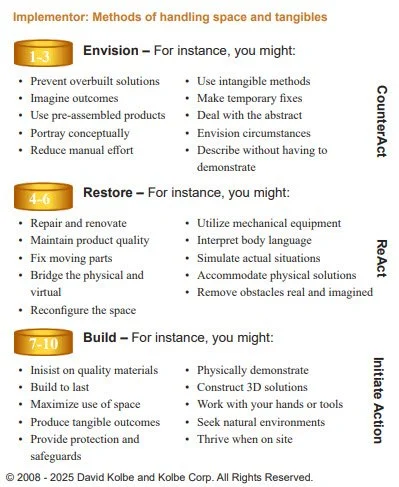
Work with their hands
Build, repair, and construct
Shape and manipulate tangible materials
Solve problems in physical space
These are the exact instincts required in Northwest Indiana’s core industries.
But here’s the challenge:
Implementors don’t thrive in traditional learning environments.
They don’t learn best by sitting still.
They don’t absorb information best through lectures.
They don’t demonstrate talent through written tests.
They learn by doing.
And when that opportunity isn’t present—they disengage.
What the Data Shows: A System Mismatch
In our recent Work Big employability bootcamp - delivered in partnership with the City of Gary - we analyzed Kolbe A Index data across 50 participants.
The results were striking.
60% of participants naturally “Restore”—they are wired to repair, fix, and work with tangible systems
16% “Build” lasting, tangible, concrete solutions at high levels
Meanwhile, strong concentrations exist in Stabilize (62%), Specify (50%), Explain (42%), Systematize (42%), and Maintain (54%), indicating reliability, consistency, and operational strength
This is not a talent deficit.
This is a system misalignment.
We have a workforce rich in practical, grounded, dependable, hands-on capability—
but a system that has not consistently given them the right environment to succeed.
The Consequence: A Generation That Feels “Behind”
When Implementor talent is forced into environments dominated by:
Fact-finding and abstract analysis
Structured processes and rigid systems
Lecture-based instruction and passive learning
They often internalize a false narrative:
“I’m not good at learning.”
“I’m not ready.”
“I’m behind.”
But the truth is:
They were never taught in a way that matches how they are naturally built to succeed.
The Opportunity: Rebuilding Workforce Development Around How People Actually Work
This is where Northwest Indiana has a chance to lead the country.
Through NWI Works and the Opportunity Hub model, we are not just adding programs—we are rebuilding the system around human capability.
At the center of this shift is the integration of the Kolbe System into workforce development.
A New Model: Identify → Validate → Activate
Every participant in the Fast Track to Top Jobs program receives the Kolbe A Index.
This changes everything.
1. Identify Talent
We no longer guess what someone is good at—we measure how they take action.
We can quickly identify Implementors who are wired for hands-on careers. As well as others with the talent to visualize conceptual solutions.
2. Validate Strengths
Participants see, often for the first time, that their instincts are not weaknesses—they are valuable, in-demand strengths.
This builds confidence and engagement immediately.
3. Activate Through Hands-On Learning
Instead of forcing people into passive learning environments, we design experiences that match their instincts:
Activity-based bootcamps
Simulations
Labs
Work experience-based learning
Real equipment and real tasks
Employer-connected projects
This is not theory. It’s applied learning with purpose.
Why This Matters for Northwest Indiana’s Economy
Northwest Indiana’s growth is not limited by jobs.
It is limited by talent pipeline alignment.
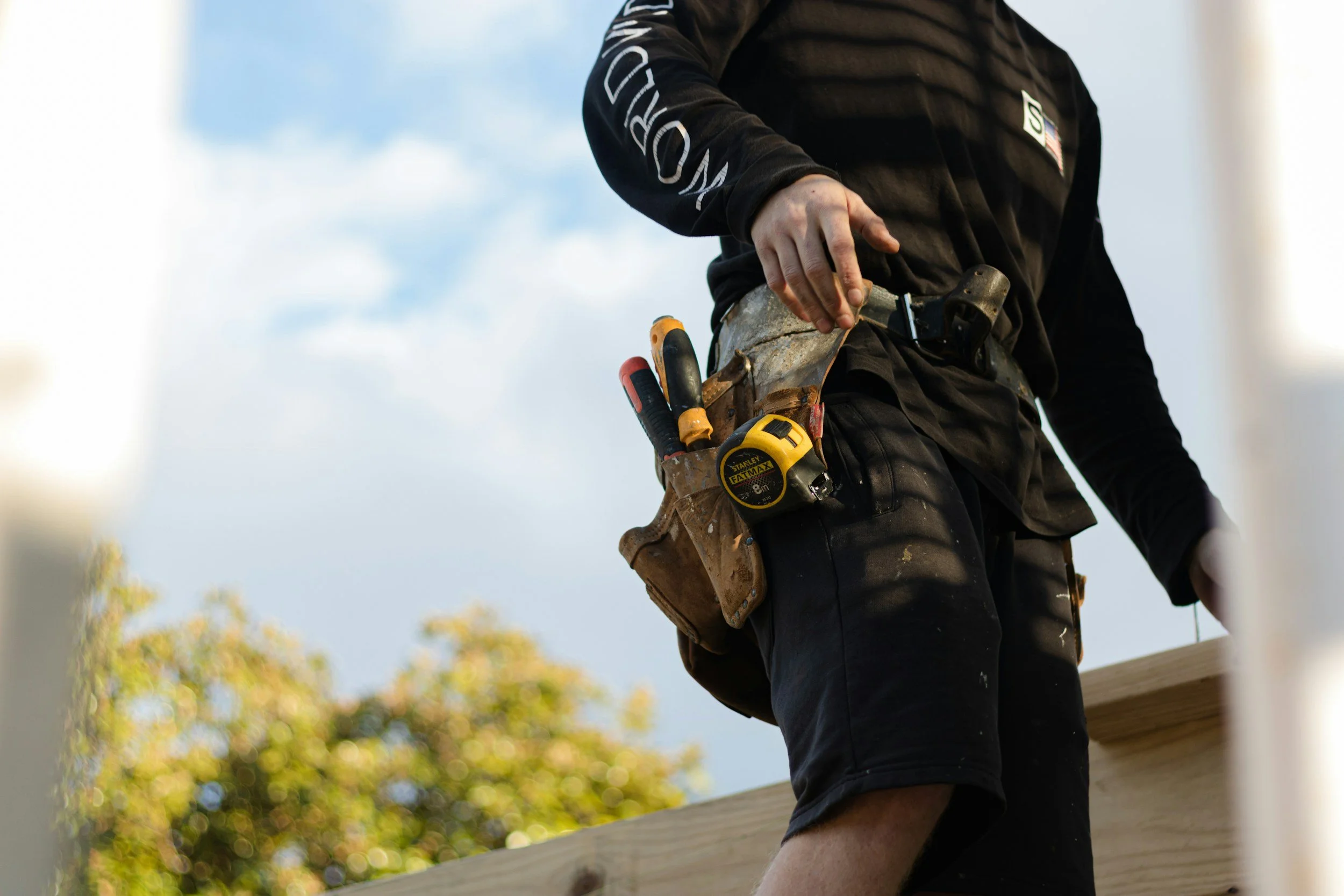
Our priority sectors require thousands of workers who can:
Operate machinery
Maintain infrastructure
Build and repair systems
Deliver services in real-world environments
These are Implementor-driven roles.
By identifying and activating this talent faster, we can:
Reduce time-to-employment
Increase job retention
Improve employer satisfaction
Raise wages and career mobility
And most importantly:
Reconnect residents to opportunity in a way that feels natural and achievable.
From Gary to the Region: A Scalable Solution
The Work Big cohort in Gary is proving what’s possible.
In a city focused on rebuilding—literally and economically—we are seeing:
Talent that was previously overlooked
Engagement from participants who struggled in traditional settings
Faster readiness when learning is hands-on and employer-connected
This is not a pilot.
It is a blueprint for scaling across Northwest Indiana.
The Future: A Workforce System Built on How People Work
The future of workforce development will not be defined by more programs.
It will be defined by better talent with system alignment.
Alignment between:
Talent and training
Learning and doing
People and pathways
Employers and outcomes
The Kolbe System gives us the tool to make that alignment real.
A New Standard for Workforce Readiness
When every participant understands how they naturally take action…
When every training program reflects how people actually learn…
When every employer pipeline is built around real human capability…
We stop asking why people aren’t ready.
And we start seeing what has been there all along:
A workforce ready to build the future of Northwest Indiana—once given the chance to do it their way.
Visit www.nwiworks.org for more information.