

Strategy Leadership Resources
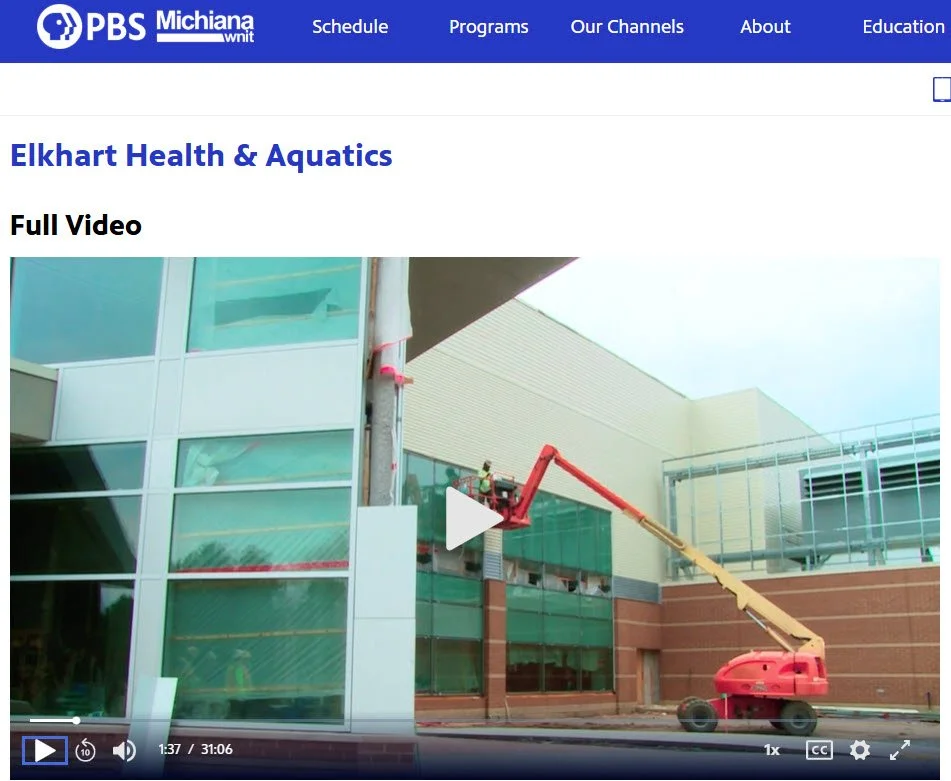
A Documentary Reminder About Successful Private-Public Partnerships
The WNIT special on Elkhart Health & Aquatics presents the project as a model public-private partnership that transformed the closure of the old YMCA into a broader community investment in health, education, economic development, and quality of life. The facility was developed through collaboration among Beacon Health System, Elkhart Community Schools, the Community Foundation of Elkhart County, city leadership, private donors, and local businesses.

The Missing Ingredient in Workforce Development: Restoring Hidden Talent in Northwest Indiana
For years, we’ve asked the wrong question in workforce development. We’ve asked: Why aren’t people ready for work? But a better question is emerging in Northwest Indiana: What if people are ready—but we’ve never taught them in the way they’re wired to learn?
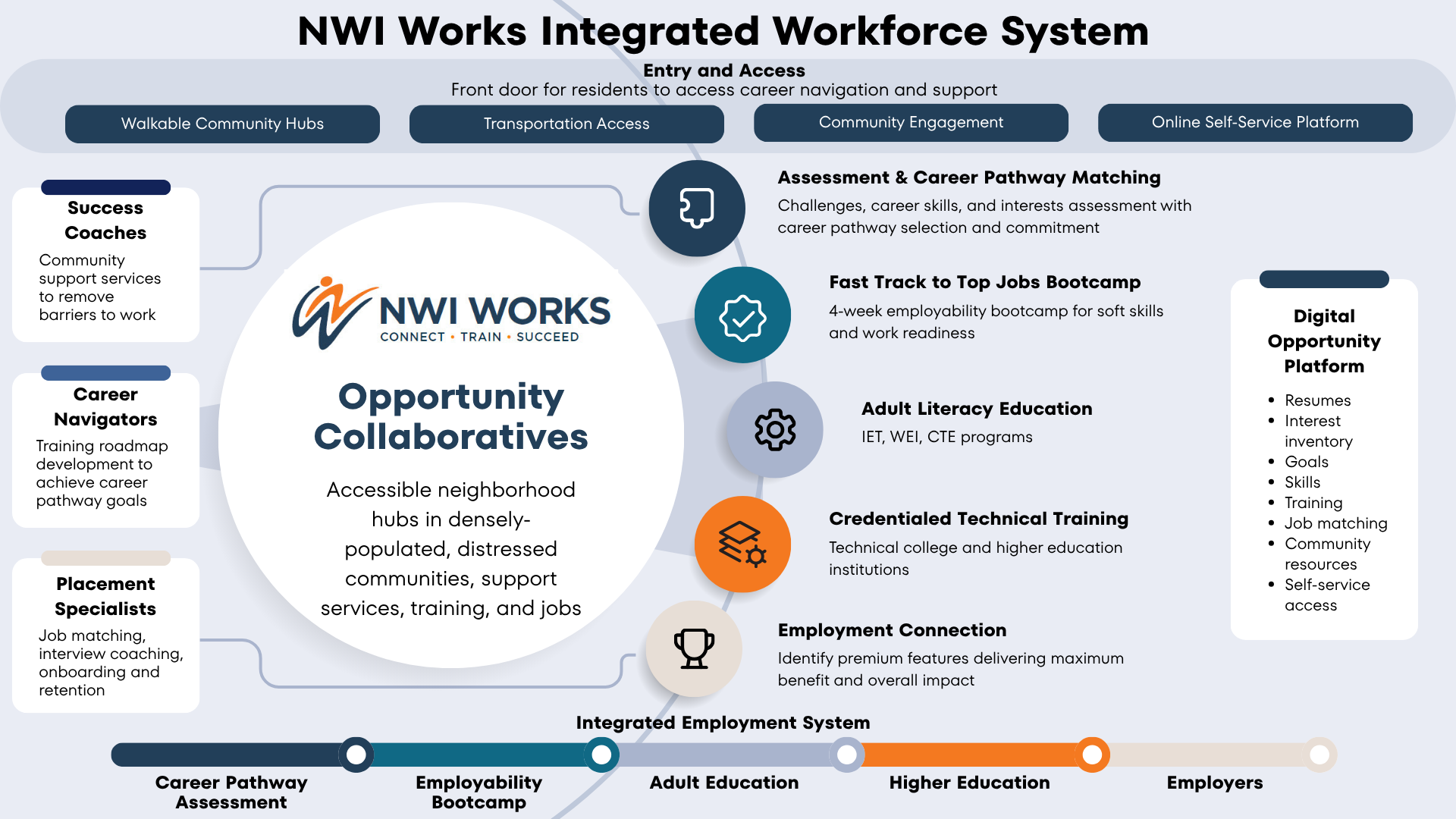
PROJECT NEWS: NWI Works - Building Indiana’s First Integrated Workforce System?
With over 74,000 open jobs and 71% of employers reporting talent shortages, the region’s growth is constrained not by opportunity, but by the lack of a coordinated system that prepares adults quickly and effectively for work . Today’s workforce landscape is fragmented. Education, workforce programs, and social services operate in silos—creating a “maze” for adults seeking to advance and leaving employers without reliable talent pipelines. Training pathways often take years, while employers need workers ready in weeks or months .

The Leadership Continuity Crisis
Across industries, a quiet risk is compounding inside otherwise successful organizations. Revenues may be strong. Strategy decks are polished. Boards meet regularly. Succession plans exist in binders. And yet—continuity is fragile. Founders are aging. CEOs are fatigued. Boards are cautious. Senior leaders are overextended. High-potential talent is uncertain about the future. At the same time, AI disruption, economic volatility, demographic shifts, and governance scrutiny are accelerating. Individually, strategy, succession planning, and governance appear intact.
Collectively, they are often disconnected. That disconnection is the real leadership continuity crisis.

Rethinking What’s Really Happening Inside Nonprofit Boards
Across the nonprofit sector, a quiet tension is surfacing in boardrooms. Some boards feel disengaged. Others feel overinvolved. Many feel both — at the same time. Recent governance conversations, including insights from the Chronicle of Philanthropy’s webinar Key Ways to Foster Board Engagement, suggest that engagement today feels harder not because people care less, but because the environment has changed faster than governance habits have.

The Financial Case for Courageous Succession
Succession planning is often treated as a leadership development issue. It isn’t. It is an enterprise risk management issue. When a CEO transitions leadership to an untested or behaviorally unready successor, the cost is rarely immediate — but it is almost always measurable. The mistake many organizations make is evaluating succession emotionally or politically rather than financially. But when you quantify the downside risk of getting it wrong, one thing becomes clear: Preventive clarity is far less expensive than corrective recovery.

When the Heir Apparent Isn’t Ready
Historically, succession planning emphasized competence, loyalty, and performance metrics. If someone could run the operations, manage financials, and execute strategy, they were considered viable. That model no longer holds. Today’s organizations are flatter, more transparent, and less tolerant of leadership behaviors that suppress voice or centralize authority. High-performing teams expect psychological safety, collaborative decision-making, and emotionally regulated leadership.

If You Don’t Frame the Decision, You Don’t Get One
Many executive teams don’t actually struggle with disagreement. They struggle with decision framing. Meetings feel productive. Conversation is rich. Perspectives are shared. But at the end, nothing is clear. No defined decision. No ownership. No forward motion. The result? Recycled conversations, passive frustration, and stalled growth. This isn’t a personality problem. It’s a process problem.

Why Leaders Need to Be Less “Nice” — and More Actively Good
Many of us have been told that great leaders should be nice — approachable, warm, and likable. But a recent Harvard Business Review article argues that this widely accepted leadership ideal can be a trap. In today’s competitive and rapidly changing world, being nice isn’t the same as being effective — and leaders who confuse the two risk holding their organizations back.

When “Actively Passive” Leadership Stunts Growth — and How to Shift the Mindset
Most organizations don’t stall because of bad strategy. They stall because of actively passive leadership. Actively passive leaders are not disengaged. They attend meetings, approve plans, and offer thoughtful commentary. They care deeply about the organization. On the surface, they appear responsible and steady. But underneath, something critical is missing: ownership of forward movement.

Process Improvement: How Root Cause Analysis Drives Better Solutions and Higher Performance
Unlocking performance starts with solving the right problem—not just the visible symptoms. Our latest Insight Strategic Concepts article breaks down the steps for effective root cause analysis and shows how organizations can eliminate waste, reduce inefficiencies, and implement solutions that actually stick. If recurring issues are draining time, budget, or team morale… this one’s for you. Read the full article and start transforming your processes today.

Target Market Segmentation: The Fastest Path to Revenue Growth
Most organizations don’t have a sales problem—they have a focus problem. When you try to reach everyone, you convert almost no one. Our latest Insight Strategic Concepts article breaks down why precise target market segmentation is the single fastest way to accelerate revenue. If you want to tighten your strategy, improve your aim, and generate revenue faster, this is a must-read.